


Your European partner in climbing holds for school climbing wall projects.
If you install climbing walls in schools and secondary institutions, you know that an educational project is not solved with “nice-looking holds” alone. It requires reliable supply, logical selection, and the confidence that everything meets the demands of a school environment.
Eclipse Presas manufactures certified and approved climbing holds for installation in schools.
At Eclipse Presas, we act as a specialised partner for European installers. We support you in selecting climbing holds with clear progression logic (from beginners to more advanced levels) and supply the products with the appropriate documentation so you can deliver your installation with confidence.
We are a Spanish company with over 10 years of experience delivering certified climbing wall installations in educational centres. Our background as installers is what sets us apart. We do not design from a generic catalogue perspective, but from real on-site experience and day-to-day school usage.
Our climbing holds are developed with:
- Clear progression structure (children, teenagers and mixed levels)
- Durability for intensive school use
- Compliance with recognised European safety standards
If you are looking for a supplier who understands your technical and operational challenges, you are working with a partner built around real installation experience.
UNE-EN 1257-2:2017

UNE-EN 1257-3:2017

Installation and Anchor Inspection Certificate
Why choose Eclipse Presas as your climbing hold supplier?
1) Real experience as installers in Spain (school environment)
We can advise you from an installer’s perspective. We know which combinations of climbing holds work best in a school climbing wall: quantities, hold types (footholds, beginner holds, progression holds), level distribution, and what educational institutions typically require in terms of documentation and safety.
2) Manufacturing with certification and official approval
We manufacture climbing holds under UNE-EN 12572-3:2017 certification, with regulatory evaluation carried out by the Instituto de Biomecánica de Valencia.
3) Fast shipping across Europe and free delivery on large orders
We supply multiple European countries with estimated delivery times (3–5 working days to several EU destinations) and free shipping from €395 for countries such as Portugal, Germany, France, Italy, Belgium, the Netherlands, Luxembourg, Austria, the Czech Republic, Poland, Slovakia and Slovenia.
4) Professional guidance backed by thousands of customers
Our guidance is not theoretical: it is based on real projects and genuine customer feedback. More than 1,500 people across Europe have left their review.
How to install a climbing wall in a school?
To install a climbing wall in a school, several aspects must be taken into account, such as the regulations it must comply with and the requirements that should be set for users.
The climbing wall must have a series of construction certificates and technical requirements regulated by UNE-EN 12572-2:2017, aimed at controlling and standardising the construction of artificial climbing walls. There is also a standard for climbing holds (UNE-EN 12572-2:2017) and for the rest of the equipment required to practise this activity on an artificial wall.
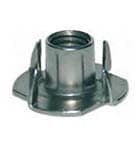
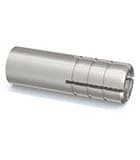
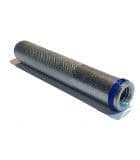
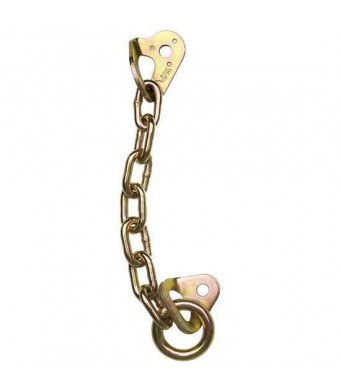
These standards are easy to comply with by using appropriate anchors depending on the type of wall on which the holds are to be installed. Installation is straightforward on solid concrete using hammer-in anchors or on hollow brick walls with suitable chemical anchors.
Climbing Wall Construction
The climbing wall can be installed both indoors and outdoors. A climbing wall for teenagers and children should have between 6 and 8 holds per square metre, depending on the age range of the children who will use it. The aim is not to create difficulty, but to improve children’s psychomotor skills.
The holds must be bolted onto concrete or brick, never onto plasterboard. They should have a pleasant texture and rounded edges for comfortable gripping.
Educational Application of the Climbing Wall
Climbing is an ideal tool to encourage cooperation among students and to strengthen personal relationships.
There are different types of climbing walls that allow children to progress horizontally and climb short vertical sections.
The so-called 'boulder' climbing wall is the most suitable setting for teenagers and children, as it allows a wide range of activities and games without compromising safety. Some of the activities that can be carried out include:
- Climbing in pairs.
- The waiter game, which consists of crossing the climbing wall while carrying an object without dropping it.
- The blind guide, similar to climbing in pairs, but the climber is blindfolded and guided by their partner.
- Ball climbing, where participants climb with a ball held against their stomach.
- The crossing game, where one person starts at each side and they meet in the middle, having to manoeuvre past each other and continue.
Benefits of Climbing for Children
Climbing is a way to channel children’s energy while they have fun and engage in physical activity. It improves their physical and social skills, enhances their body awareness and provides psychological benefits that contribute to personality development. Among the benefits of climbing, we highlight the following:
- Development of decision-making skills, as it sharpens their thinking. They must anticipate situations and make key decisions to progress correctly.
- Children and teenagers who practise this activity improve their endurance and flexibility.
- Greater psychomotor development between legs, arms and eyes.
- Through climbing, children increase their self-confidence, learn the importance of perseverance, improve their self-esteem and enhance attention and concentration.
- This sport, like any other, helps combat sedentary lifestyles and childhood obesity.
- Climbing develops laterality, improves body awareness, and enhances balance and agility.
- When practised in groups, it promotes cooperation and builds trust among peers.
- It encourages children to become more independent, as they must find solutions to overcome obstacles both in climbing and in life.
- As a highly dynamic activity, it helps reduce childhood stress, excess energy and nervousness, promoting relaxation.
What should climbing holds be like for a school climbing wall?
Holds can be classified according to hand position and may include underclings, pockets, pinches, jugs, slopers and crimps.
Climbing holds are usually made from resin compounds mixed with mineral fillers. They should have high-quality finishes and durability guarantees. There are also holds specially designed for younger children in the shape of letters, numbers or animal figures to support learning.
Footholds and handholds replicate natural rock features, and it is important not to focus solely on the climbing wall budget, but also on value for money, the variety of sizes and the number of holds provided.
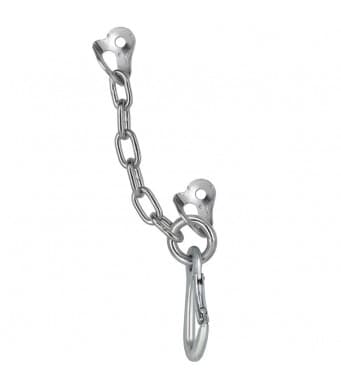
Anchor bolts are essential when fixing climbing holds.
Safety on the Climbing Wall
Climbing routes should be designed more horizontally than vertically. Potential fall zones must be covered with safety mats, rubber flooring or gravel pits to cushion falls.
A hard and thin-soled shoe should be worn to improve foothold sensitivity and support. Indoor court shoes such as those used for handball or futsal are suitable, although climbing shoes are recommended due to their grip and the relaxed posture they allow the climber to maintain.
In addition, the climbing wall must be properly designed in accordance with the regulations mentioned at the beginning of this article.
As you can see, installing a climbing wall in a school can be extremely positive, contributing to children’s education, improving their self-esteem and strengthening their decision-making skills in all areas of life.
 JUG HOLDS
  SLOPER HOLDS
 CRIMP HOLDS
 PINCH HOLDS
 2 FINGER POCKETS
 FEET HOLDS
 CHILDREN
 VOLUMES
 SPEED HOLDS
 FAMILY PACKS